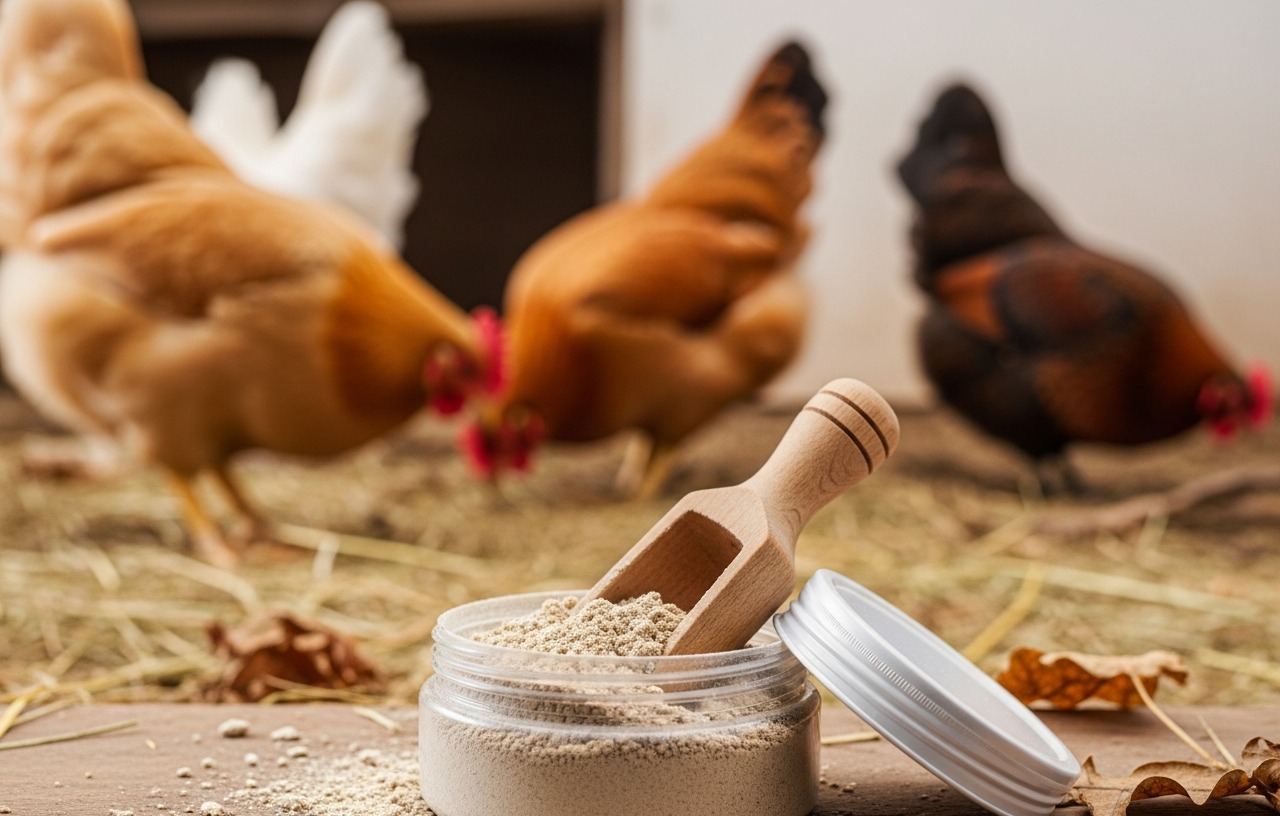
Manna Pro 16% Chicken Feed with Probiotics | Layer Crumbles and Pellets | 8 Pounds Each
- Complete feed with 16% protein to support egg production and gut health with added probiotics.
- Comes with 8 lbs of nutritionally balanced crumbles and 8 lbs of pellets for easy intake and less waste.
- Formulated by dedicated nutritionists for optimal health and egg production in laying hens.
- No artificial flavors or colors; made with quality ingredients and care by the trusted Manna Pro brand.
- Layer feed made to nurture happy, healthy hens and vibrant eggs.

Rooster Booster B-12 Liquid, 32-Ounce
- Stimulates appetite
- Oxygenates blood
- Increases alertness
- For poultry

lvermect for Chickens, Chickens forDewormex, Suitable for Chickens, Ducks, and Geese, 30mL
- Effective within 3-5 days; allow at least 7 days between consecutive applications
- Does not affect egg production and appetite
- Can be taken orally or applied topically
- NDC Code: 87276-260
Seeing your beloved backyard chickens suddenly shedding feathers and looking a bit disheveled can be concerning, especially if you're new to poultry keeping. Rest assured, in most cases, this is a completely natural and healthy process known as molting. However, understanding what to do, and just as importantly, what not to do, can make a world of difference for your flock's well-being and a swift return to egg production.
Many chicken keepers wonder, "When do chickens molt?" Typically, most hens will experience their first full molt around 16-18 months of age, and then annually thereafter, usually in the late summer or fall as daylight hours begin to shorten. This natural cycle allows them to replace old, worn-out feathers with a fresh, new insulated coat, preparing them for colder weather. While molting is a normal part of a chicken's life, it's a physically demanding time, and their nutritional needs change drastically.
Is It Molting Chickens or Something Else? Common Causes of Feather Loss
Before you jump into supportive care, it's important to confirm that your chickens and molting are indeed the reason for feather loss, and not a more serious issue. While natural feather shedding is the most common cause, other factors can also lead to a patchy or bare flock. The most common causes of feather loss in chickens include:
- Natural Molting: The most frequent reason, characterized by symmetrical feather loss, usually starting from the head and neck, moving down the body. Egg production often ceases or significantly decreases.
- Parasites: Mites and lice can cause intense itching, leading to feather plucking and damage.
- Nutritional Deficiencies: A lack of essential protein, vitamins, or minerals can result in poor feather quality and loss.
- Stress: Changes in environment, overcrowding, or predator threats can trigger stress-induced feather loss.
- Bullying or Pecking: Aggressive flock members may pull out feathers, often around the vent or back.
Observing your hen molting patterns closely will help you differentiate. A typical molt will show new 'pin feathers' emerging, which look like small, waxy quills. These are sensitive, so avoid excessive handling during this time.
Supporting Your Molting Chickens: The Easiest and Most Affordable Fixes First
Once you've confirmed your chickens are molting, your primary goal is to support their bodies through this energy-intensive process. The good news is that many of the most effective solutions are relatively easy and budget-friendly.
1. Boost Their Nutrition: The Key to Feather Regrowth
Feathers are approximately 85% protein, so growing a whole new set of them requires a significant dietary investment. During a molt, your chickens need a higher protein diet than their regular layer feed. Look for a feed with at least 18-20% protein. This is where specialized chicken feed for molting becomes incredibly helpful.
"During a molt, a chicken's body is working overtime to produce new feathers, which are almost entirely protein," explains Dr. Sarah Jensen, a poultry nutritionist at Feathered Friends Feed Co. "Boosting protein intake to 18-20% during this period, along with essential vitamins and minerals, is critical for a smooth and efficient feather regrowth process."
We highly recommend the Manna Pro 16% Chicken Feed with Probiotics. While it's a 16% protein feed designed for egg production, its carefully formulated blend, including probiotics for gut health, provides excellent foundational support. For molting, you can supplement it with additional protein sources to reach that 18-20% target. This product comes with 8 lbs of nutritionally balanced crumbles and 8 lbs of pellets, offering variety and reducing waste. A 16-pound combined package typically costs around $18-25, making it a cost effective choice for premium nutrition.
Additional Protein Sources for Feed for Molting Chickens:
- Mealworms: A fantastic protein treat. A 5-pound bag of dried mealworms costs approximately $15-25. Offer a small handful per chicken daily.
- Scrambled Eggs: Yes, chickens can eat eggs! Cooked eggs are a complete protein source. Use leftover eggs or less-than-perfect ones. This is essentially free if you use your own eggs.
- Black Oil Sunflower Seeds (BOSS): High in protein and healthy fats. A 10-pound bag costs about $10-15.
- Alfalfa Hay or Pellets: Good for fiber and some protein. A small bag of alfalfa pellets might be $8-15.
Beyond protein, ensure constant access to fresh, clean water. You might also consider adding electrolytes and vitamins to their water, especially if your hens seem lethargic or stressed. A 4-ounce container of poultry electrolytes costs around $10-20 and can last for many applications.
If your hens are losing their appetite during molting, which can happen due to the stress, a supplement like Rooster Booster B-12 Liquid, 32-Ounce can be very beneficial. It helps stimulate appetite, oxygenate blood, and increase alertness, giving them the energy boost they need to eat and recover. A 32-ounce bottle typically costs $15-25.
2. Reduce Stress and Maintain Routine
Molting is a stressful time for chickens. Their bodies are working hard, and they can feel vulnerable without their full coat of feathers. Minimize any additional stressors:
- Keep routines consistent: Try to feed and water at the same times each day.
- Avoid introducing new birds: New flock members can disrupt the pecking order and add stress.
- Limit handling: New pin feathers are sensitive and can be painful to touch.
- Provide a quiet environment: Protect them from loud noises or sudden disturbances.
3. Ensure a Comfortable Coop Environment
A clean, dry, and draft-free coop is always important, but especially so during molting. With fewer feathers, chickens are more susceptible to cold and drafts. Add extra bedding for insulation and comfort. A bale of straw or pine shavings typically costs $5-10. Ensure good ventilation without direct drafts. Make sure they have adequate roosting space, allowing them to rest undisturbed.
Troubleshooting Other Causes of Feather Loss
If your chickens aren't showing the typical signs of molting, or if their feather loss is accompanied by other concerning symptoms, you might be dealing with one of these issues:
1. Parasites: Mites and Lice
External parasites are a common culprit for feather loss and can make your hens miserable. They cause intense itching, leading to feather picking and damage, often around the vent, under the wings, or on the back. You might see small insects or their eggs at the base of feathers.
How to Check and Treat for Parasites:
- Inspect your birds: Gently part their feathers, especially around the vent, under the wings, and on the comb. Look for tiny, crawling insects (lice) or clusters of small, red or black dots (mites).
- Treat the birds: Dusting chickens with food-grade diatomaceous earth (DE) or a poultry dust containing permethrin can be effective. A 5-pound bag of DE costs $10-15, while poultry dust is $15-25. For a more targeted approach, consider a product like lvermect for Chickens, Chickens forDewormex, Suitable for Chickens, Ducks, and Geese, 30mL. This product is effective within 3-5 days, does not affect egg production or appetite, and can be taken orally or applied topically. A 30mL bottle typically costs $15-25. Allow at least 7 days between consecutive applications.
- Treat the coop: Mites often live in the coop and come out at night to feed. Thoroughly clean the coop, removing all bedding. Spray or dust roosts, nest boxes, and cracks with a permethrin-based coop spray ($15-25) or DE. Repeat treatment after 7-10 days to catch newly hatched parasites.
2. Nutritional Deficiencies (Beyond Molting Needs)
If your chickens are not molting but are still losing feathers, or their feathers appear brittle and dull, a general nutritional deficiency might be at play. This can happen if they aren't getting a complete layer feed, are fed too many scraps, or have an underlying health issue affecting nutrient absorption.
- Symptoms: Poor feather quality, pale comb and wattles, lethargy, reduced egg production, or soft-shelled eggs.
- Solution: Ensure your flock is on a high quality, complete layer feed (like the Manna Pro mentioned earlier). Limit treats to no more than 10% of their diet. You might also consider a general poultry vitamin and mineral supplement, costing $10-20.
3. Bullying and Pecking
Chickens have a pecking order, and sometimes, this can escalate to aggressive feather pulling, especially if birds are bored, overcrowded, or stressed. This type of feather loss is often localized to the back, vent, or head, and you might see raw skin or injuries.
- Symptoms: Bare patches, sometimes with scabs or blood, typically in specific areas. You might observe the pecking behavior.
- Solution:
- Increase Space: Ensure your coop and run provide ample space (at least 4 sq ft per bird in the coop, 10 sq ft in the run).
- Provide Enrichment: Offer boredom busters like hanging cabbage, scratch grains scattered in bedding, or a dust bath area.
- Identify and Isolate Bullies: If one bird is the main aggressor, temporarily removing them for a few days can sometimes reset the pecking order.
- Anti-Peck Sprays: Products like 'Rooster Booster Pick-No-More' ($10-20) can deter pecking with an unpleasant taste.
When to Call a Professional
While most molting situations can be managed at home, there are times when professional veterinary advice is crucial. Do not hesitate to contact a veterinarian specializing in poultry if you observe any of the following:
- Severe Lethargy or Weakness: If a chicken is extremely listless, unresponsive, or unable to stand.
- Loss of Appetite and Weight: Persistent refusal to eat or drink, leading to significant weight loss.
- Difficulty Breathing: Gasping, coughing, or nasal discharge.
- Persistent Diarrhea or Bloody Droppings: Signs of internal illness.
- Unexplained Injuries or Swelling: Beyond typical pecking wounds.
- No Feather Regrowth: If new feathers do not begin to emerge after a few weeks of what you suspect is molting.
- Symptoms Worsen: If home remedies or supportive care don't lead to improvement, or the flock's health declines rapidly.
"While molting is natural, any sign of severe illness, such as extreme lethargy, sudden weight loss, or difficulty breathing, warrants immediate veterinary attention," advises Dr. Tom Whitfield, DVM, a large animal veterinarian at Homestead Animal Clinic. "Don't wait if you suspect something more serious than a typical molt is affecting your flock, as early intervention can make a significant difference."
Calling a farm vet can involve a service call fee, typically ranging from $75-200 depending on your location and distance. An examination might cost an additional $50-150, with diagnostics (like fecal tests or blood work) adding $50-300, and medications extra. While these costs can add up, early diagnosis and treatment can save a valued member of your flock.
Final Thoughts on Chickens and Molting
Understanding the natural process of molting in chickens and being prepared to support your flock will ensure they emerge from this phase healthy and ready for another season of laying. By providing a high-protein diet, minimizing stress, and keeping a close eye out for other issues like parasites, you'll help your hens navigate this demanding period with ease. Patience and observation are your best tools during this time. Remember, a healthy molt means a healthy hen for the long run!
Manna Pro 16% Chicken Feed with Probiotics | Layer Crumbles and Pellets | 8 Pounds Each
- Complete feed with 16% protein to support egg production and gut health with added probiotics.
- Comes with 8 lbs of nutritionally balanced crumbles and 8 lbs of pellets for easy intake and less waste.
- Formulated by dedicated nutritionists for optimal health and egg production in laying hens.
- No artificial flavors or colors; made with quality ingredients and care by the trusted Manna Pro brand.
- Layer feed made to nurture happy, healthy hens and vibrant eggs.
Rooster Booster B-12 Liquid, 32-Ounce
- Stimulates appetite
- Oxygenates blood
- Increases alertness
- For poultry
lvermect for Chickens, Chickens forDewormex, Suitable for Chickens, Ducks, and Geese, 30mL
- Effective within 3-5 days; allow at least 7 days between consecutive applications
- Does not affect egg production and appetite
- Can be taken orally or applied topically
- NDC Code: 87276-260