
2 Pack Bird Houses for Outside- Cedar Bird House with Metal Predator Guard
- Made from natural cedar wood, this outdoor bird house features a sturdy construction designed for backyard.
- A metal guard around the 1.5-inch entrance helps protect the opening from being enlarged by squirrels and.
- 1-1/2'' ENTRANCE FOR SMALL BACKYARD BIRDS : Measuring 5.7 x 5.7 x 10.2 inches, this bird house provides a.
- The front-opening door makes it easy to access the nesting area for cleaning and seasonal maintenance.

Touri 3 Pcs Chicken Nesting Boxes, Durable
- Nesting Boxes to Provide a natural, comfortable, and safe environment for the poultry during egg laying
- Nesting Boxes for Chicken to Measuring 14 1/4 ’’ in length x 12 1/2 ’’ in width x 12 1/4 ’’ in height.
- Durable and Soft Material to Made from durable pp plate sheet, the nesting boxes is soft, comfortable, and.
- Easy Use to It is incredibly easy to use with no extra tools required; Simply attach the corresponding.
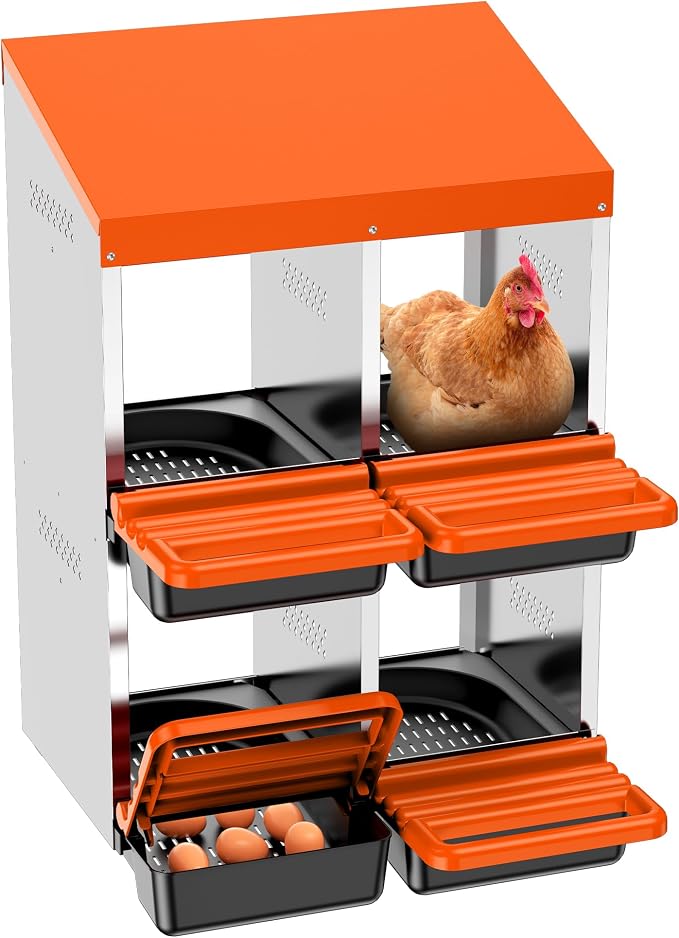
Chicken Nesting Boxes, Roll Away Nest Box for Egg Collector, 4 Holes Orange
- This 4-hole nesting box features two tiers of two compartments each, maximizing vertical space in your.
- Each nesting compartment features a slightly tilted metal tray. After laying, eggs gently roll into the.
- Built from rust-resistant galvanized steel, this nesting box withstands outdoor elements and daily use.
- Each level is equipped with a pull-out metal tray that slides out effortlessly. Simply remove the tray to.
Hens thrive when provided with a secure, comfortable space for egg laying. Building your own chicken nesting boxes ensures your flock has clean, private areas, which leads to happier hens and fewer broken eggs. This DIY approach allows for customization to fit your coop's exact dimensions and your flock's specific needs. You can create a functional and durable setup in just a few hours, saving money over purchasing pre-made units.
Why Build Your Own Chicken Nesting Boxes?
There are several compelling reasons to consider constructing your own laying boxes for chickens. The primary advantage is cost savings. Materials for a DIY project are often significantly less expensive than buying commercial nesting boxes, especially if you have scrap wood available. This makes building a hen nesting box an economical choice for any backyard chicken keeper.
Customization is another major benefit. You can tailor the size and design of your chicken nest box to perfectly integrate with your existing coop structure. This means maximizing space and ensuring the boxes are easily accessible for both your hens and for egg collection. A well designed homemade box can also be easier to clean than some store-bought options, contributing to better coop hygiene.
Finally, building a chicken laying box yourself gives you control over the materials used. You can select sturdy, non-toxic wood that will withstand daily use and the elements, ensuring a long-lasting solution for your flock's egg-laying needs.
How Many Chicken Nesting Boxes Do Your Hens Need?
A common guideline for backyard flocks is to provide one nesting box for every three to five hens. While hens often share boxes, having enough options reduces competition and stress, especially during peak laying times. For a more detailed understanding of flock size versus nesting box requirements, you can refer to our article on How Many Chicken Nesting Boxes Do Your Hens Need?
Ideal Dimensions for a Chicken Nesting Box
The standard size for a chicken nesting box is approximately 12 inches wide, 12 inches deep, and 12 inches high. This provides sufficient space for most standard-sized laying breeds like Rhode Island Reds, Plymouth Rocks, or Leghorns. If you keep larger breeds such as Orpingtons or Brahmas, you might consider slightly larger dimensions, perhaps 14 inches wide by 12 inches deep by 12 inches high, to ensure their comfort.
A small lip or a slightly raised front piece, about 4 to 6 inches high, is important. This prevents bedding material and eggs from rolling out of the box. Placing a perch in front of the box also helps hens access it easily and provides a place for them to wait their turn.
Materials and Tools List
Gathering your materials and tools before you start will make the construction process smoother and more efficient. Expect to spend approximately $30-$70 on materials if you are buying new wood, depending on the type and quantity. If you use reclaimed wood, the cost could be significantly less. The entire building process for a single nesting box unit usually takes about 2-4 hours.
Materials:
- Plywood: One 4x8 foot sheet of 1/2-inch or 3/4-inch exterior-grade plywood. This is typically enough for a multi-compartment unit.
- Wood Screws: 1 1/2-inch or 2-inch exterior-grade wood screws.
- Wood Glue: Water-resistant wood glue for added strength.
- Sandpaper (optional): Medium-grit for smoothing edges.
- Bedding Material: Pine shavings, straw, or hay for the finished boxes.
Tools:
- Measuring Tape: For accurate measurements.
- Pencil: For marking cuts.
- Straight Edge or Speed Square: For drawing straight lines.
- Circular Saw or Hand Saw: For cutting plywood.
- Drill/Driver: For pre-drilling holes and driving screws.
- Drill Bits: Appropriate sizes for pilot holes and screw heads.
- Safety Glasses: Always wear eye protection when cutting or drilling.
- Work Gloves: To protect your hands.
step by step Guide to Building Chicken Nesting Boxes
Step 1: Plan Your Design and Measure
Decide on the number of nesting boxes you need and whether you want them arranged in a single row, stacked, or as a multi-tier unit. Measure the space available in your coop to make sure the boxes will fit without obstructing pathways or other coop features. A good approach is to sketch out your design, noting the dimensions for each piece of wood.
Step 2: Cut the Wood Pieces
Based on your plan, carefully measure and mark your plywood. For a basic 12x12x12 inch box, you will need:
- Base: 1 piece, 12 inches by 12 inches.
- Sides: 2 pieces, 12 inches by 12 inches.
- Back: 1 piece, 12 inches by 12 inches.
- Front Lip: 1 piece, 12 inches by 4-6 inches (height depends on preference).
- Top/Roof: 1 piece, 12 inches by 12 inches (or slightly larger if you want an overhang).
- Perch (optional): 1 piece, 2 inches wide by 12 inches long.
Use your circular saw or hand saw to make precise cuts. Take your time to ensure straight lines. Small errors in cutting can make assembly difficult. Always wear safety glasses when operating power tools.
Step 3: Assemble the Base and Sides
Begin by attaching the two side pieces to the base. Apply wood glue along the edges of the base where the sides will meet. Position the side pieces flush with the edges of the base. Pre-drill pilot holes to prevent the plywood from splitting. Then, secure the sides to the base using 1 1/2-inch or 2-inch wood screws. Use at least two screws per side.
Step 4: Attach the Back and Front Lip
Next, attach the back piece to the assembled base and sides. Apply glue, pre-drill, and screw it into place. Ensure it is flush with the back edges of the side pieces. Then, attach the front lip. This piece should be positioned along the front edge of the base, creating a barrier to keep bedding and eggs inside the box. Glue and screw it securely.
Step 5: Create the Roof
For a simple design, the top piece acts as a flat roof. Glue and screw it onto the top edges of the side and back pieces. If you are building multiple stacked boxes, the base of the upper box will serve as the roof for the lower box. Consider a slightly sloped roof if the boxes are exposed to rain or if you want to prevent hens from roosting on top, which can lead to messy boxes. A sloped roof can be achieved by cutting the side pieces at an angle.
Step 6: Install Perches (Optional but Recommended)
A perch provides a valuable landing spot for hens before they enter the nesting box. Cut a piece of wood, roughly 2 inches wide, to the length of your nesting box opening. Attach it a few inches below the opening of the box, using screws. Make sure the perch is sturdy and level. This step helps hens access the boxes comfortably and reduces stress.
Step 7: Mount the Boxes and Add Bedding
Once assembled, decide on the best location in your coop. Nesting boxes should be elevated 18 to 24 inches off the coop floor to keep them clean and away from predators. Securely mount your new chicken nesting boxes to the coop wall using sturdy screws or brackets. Make sure they are level and stable. Proper predator proofing is essential for your flock's safety. For advice on this, check out our guide on Chicken Coop Predator Proofing.
Fill each compartment with a generous layer of comfortable bedding. Pine shavings, straw, or hay are excellent choices. Aim for about 3-6 inches of bedding to provide cushioning and absorb moisture. For more information on bedding options, read our article on Best Chicken Coop Bedding.
Considering Pre-Made Nesting Boxes
If building your own is not feasible, several excellent pre-made options are available. These can save time and effort. The Touri 3 Pcs Chicken Nesting Boxes, for example, are made from durable PP plate sheets and offer a natural, comfortable, and safe environment for egg laying. They measure 14 1/4 inches in length by 12 1/2 inches in width by 12 1/4 inches in height, fitting well within ideal dimensions for most hens.
Roll-Away Nesting Box Designs
For those interested in advanced designs, roll-away nesting boxes offer a significant advantage by keeping eggs clean and reducing breakage. These boxes feature a tilted floor that gently rolls newly laid eggs into a collection tray, away from the hens. This design prevents hens from pecking at or soiling eggs. The Chicken Nesting Boxes, Roll Away Nest Box for Egg Collector, 4 Holes Orange, is an example of a commercial option with this feature. It uses rust-resistant galvanized steel for durability and maximizes vertical space with its two-tier, four-compartment design.
While building a roll-away system yourself requires more precision and specialized components like tilted metal trays, the basic box construction principles remain the same. You would simply incorporate a sloped floor and an external collection area into your design.
Maintaining Your Chicken Nest Boxes
Regular maintenance of your chicken nesting boxes is vital for a healthy flock and clean eggs. Hens prefer clean nesting areas, and neglecting this can lead to them laying eggs in undesirable spots around the coop. Aim to refresh the bedding material every week or two, or more frequently if it becomes soiled. A full cleaning, involving removing all bedding, scrubbing the boxes with a mild, pet-safe disinfectant, and allowing them to dry thoroughly, should occur every month or two. This prevents the buildup of bacteria and parasites.
Troubleshooting Common Nesting Box Issues
Even with well built boxes, you might encounter some common issues. If hens are not using the nesting boxes, check their placement. Are they too low, too high, or in a high-traffic area? Hens prefer privacy and quiet. Make sure the boxes are dark and inviting. Adding a golf ball or a ceramic egg to a box can sometimes encourage hens to use it, signaling that it is a safe place to lay.
Broken eggs can be a sign of insufficient bedding, overly aggressive hens, or a calcium deficiency in your flock. Ensure adequate, soft bedding is present. If pecking at eggs is an issue, consider a roll-away design or collecting eggs more frequently. Observing your flock's behavior will often reveal the root cause of any problems.
Building your own chicken nesting boxes is a rewarding project that directly benefits your flock.
2 Pack Bird Houses for Outside- Cedar Bird House with Metal Predator Guard
- Made from natural cedar wood, this outdoor bird house features a sturdy construction designed for backyard.
- A metal guard around the 1.5-inch entrance helps protect the opening from being enlarged by squirrels and.
- 1-1/2'' ENTRANCE FOR SMALL BACKYARD BIRDS : Measuring 5.7 x 5.7 x 10.2 inches, this bird house provides a.
- The front-opening door makes it easy to access the nesting area for cleaning and seasonal maintenance.
Touri 3 Pcs Chicken Nesting Boxes, Durable
- Nesting Boxes to Provide a natural, comfortable, and safe environment for the poultry during egg laying
- Nesting Boxes for Chicken to Measuring 14 1/4 ’’ in length x 12 1/2 ’’ in width x 12 1/4 ’’ in height.
- Durable and Soft Material to Made from durable pp plate sheet, the nesting boxes is soft, comfortable, and.
- Easy Use to It is incredibly easy to use with no extra tools required; Simply attach the corresponding.
Chicken Nesting Boxes, Roll Away Nest Box for Egg Collector, 4 Holes Orange
- This 4-hole nesting box features two tiers of two compartments each, maximizing vertical space in your.
- Each nesting compartment features a slightly tilted metal tray. After laying, eggs gently roll into the.
- Built from rust-resistant galvanized steel, this nesting box withstands outdoor elements and daily use.
- Each level is equipped with a pull-out metal tray that slides out effortlessly. Simply remove the tray to.