
MICROBE-LIFT Chicken Coop Cleaner and Odor Eliminator, Use on All Surfaces and Supplies, Turns Chicken Poop Into Fertilizer,
- Chicken Coop Cleaner is a unique natural solution that is easy to use for experienced & new chicken coop.
- Includes a neutralizer that attacks the ammonia smell from the chicken poop and urine and breaks it down.
- Adds nitrogen to turn chicken manure into usable fertilizer; Save time by not having to clean or change.
- Natural formula that is safe to use around chickens; It can be applied in the pen while the birds are.

FlockLeader Healthy Coop, Odor & Moisture Neutralizer for Chicken Coop,12lb
- The probiotics, acids and moisture absorbers in Healthy Coop help to keep your coop safe, neutralize.
- Healthy Coop is proudly made in the United States. The probiotics used in our products are protected and.
- Healthy Coop contains probiotics to help seed the coop and nesting area with good bacteria and neutralize.
- This unique granulated probiotic includes moisture scavengers and organic acids to help protect the health.

Hatortempt Chicken Coop Deodorizer, Odor Eliminator Cleaner Spray, 32 fl oz
- Eliminate Ammonia Instantly: Our enzymatic chicken coop cleaner neutralizes ammonia at the source for a.
- Safe and Fast Drying: Our natural coop refresher for chickens is non-toxic, for use on toys, nesting boxes.
- Neutralizes in Minutes: Unlike barn lime, our easy chicken coop freshener requires no prep, reducing coop.
- No Rinse or Dust Clouds: Spray and go, our no-rinse chicken coop refresher makes maintaining multiple.
A chicken coop can accumulate droppings, spilled feed, and soiled bedding over weeks, creating an environment ripe for pathogens, mites, and unpleasant odors. Ignoring regular cleaning can lead to respiratory issues, parasitic infestations, and overall stress for your flock. Learning how to deep clean your chicken coop is a fundamental part of responsible chicken keeping. A thorough cleaning not only improves the living conditions for your hens but also contributes to better egg quality and reduces the risk of disease.
We will cover necessary tools, safety precautions, and recommended cleaning products, including those that help turn chicken manure into usable fertilizer.
Why Deep Clean Your Chicken Coop?
Beyond the obvious benefit of reducing foul smells, deep cleaning serves several critical purposes for your flock's health and well-being. Ammonia buildup from droppings can irritate chickens' respiratory systems, making them susceptible to infections. Parasites like mites and lice thrive in dirty environments, causing discomfort, stress, and reduced egg production. Piles of old bedding and feed can also attract rodents and other predators, compromising the safety of your birds.
A deep clean eliminates these threats by removing accumulated waste, sanitizing surfaces, and disrupting pest life cycles. It also allows you to inspect the coop structure for damage, potential entry points for predators, or areas needing repair. This proactive approach helps prevent costly veterinary visits and ensures your chickens live in a stress-free habitat.
When to Deep Clean Your Chicken Coop
The frequency of deep cleaning depends on several factors, including the size of your coop, the number of chickens, and the climate. Generally, most backyard chicken keepers find that a deep clean every 1 to 3 months is sufficient. Coops with a higher bird density or those in humid climates may need more frequent attention.
Beyond routine scheduling, certain situations demand an immediate deep clean:
- After a Disease Outbreak: If your flock has experienced illness, a thorough disinfection is essential to prevent recurrence.
- Before Introducing New Birds: Always clean and sanitize the coop before adding new chickens to protect both the existing flock and the newcomers.
- Seasonal Changes: A deep clean before winterizing your coop helps create a healthy environment for the colder months. Similarly, a spring clean refreshes the coop after winter.
- Noticeable Odor or Pest Issues: If you detect a strong ammonia smell or spot signs of mites, lice, or rodents, it is time for a deep clean.
Tools and Materials You Will Need
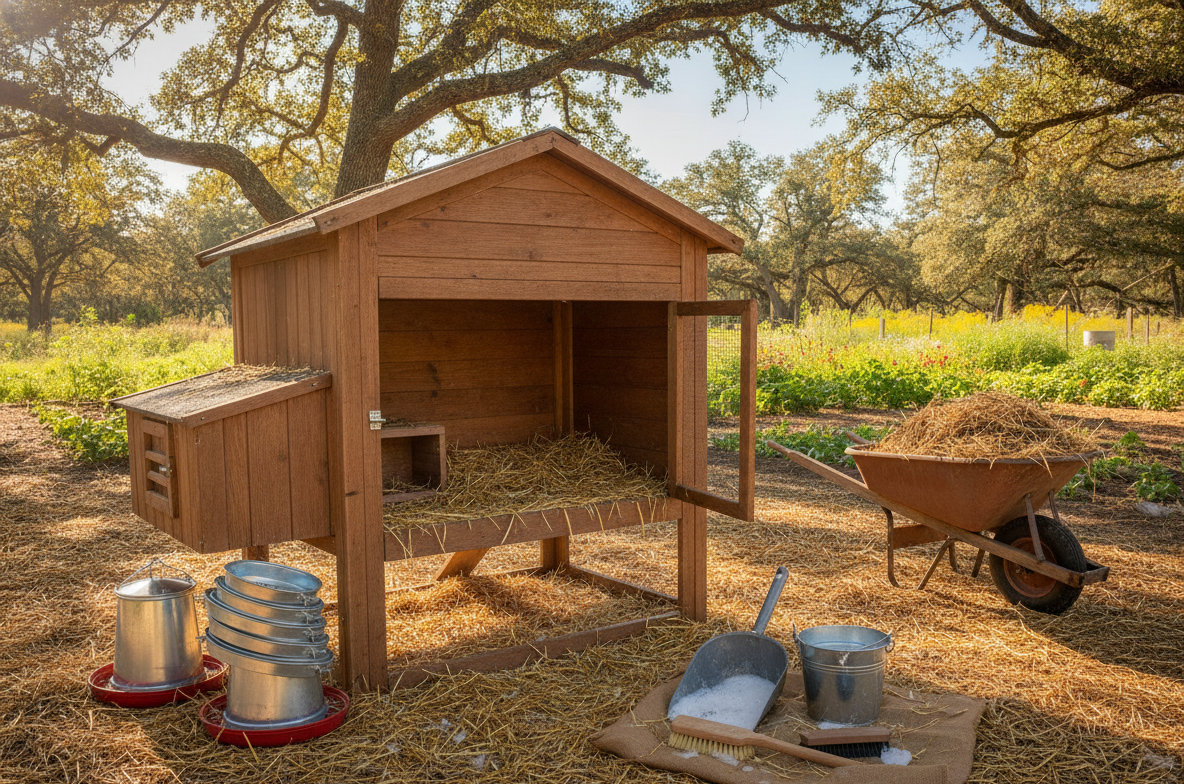
Gathering your supplies before you start will make the process more efficient. Here is a list of essential tools and materials for a successful deep clean:
- Gloves: heavy duty rubber gloves protect your hands.
- Dust Mask/Respirator: Essential for protecting your lungs from dust, dander, and ammonia fumes.
- Safety Goggles: Protect your eyes from debris and cleaning solutions.
- Shovel or Spade: For scooping out large amounts of soiled bedding.
- Stiff-Bristled Brush or Scraper: To remove caked-on droppings.
- Broom: For sweeping loose debris.
- Hose with a Nozzle or Pressure Washer: For rinsing surfaces.
- Buckets: For mixing cleaning solutions.
- Cleaning Solution: White vinegar, diluted bleach (1 part bleach to 10 parts water), or specialized coop cleaners.
- Disinfectant: A pet-safe disinfectant or a natural option like the MICROBE-LIFT Chicken Coop Cleaner.
- New Bedding: Fresh pine shavings, straw, or hemp. Consider best chicken coop bedding options for your flock.
- Large Trash Bags or Wheelbarrow: For waste disposal.
- Empty Feed Bags or Tarps: To temporarily store cleaned items.
step by step Guide: How to Deep Clean Chicken Coop
Step 1: Relocate Your Chickens
The first and most important step is to move your flock to a secure temporary location. This could be a separate run, a large dog kennel, or a temporary fenced area. Make sure they have access to food, water, and shade. Do not attempt to clean the coop with chickens inside, as cleaning products and the dust generated can be harmful to them.
Step 2: Remove All Old Bedding and Waste
Open all coop doors and windows to maximize ventilation. Use your shovel and scraper to remove every bit of old bedding, droppings, and spilled feed from the coop floor, nesting boxes, and roosting bars. Pay close attention to corners and crevices where waste accumulates. Place all removed material into trash bags or a wheelbarrow for composting or disposal. Chicken manure, when properly composted, makes excellent garden fertilizer.
Step 3: Scrape and Sweep All Surfaces
Once the bulk of the waste is gone, use a stiff-bristled brush or scraper to remove any caked-on droppings from the floor, walls, roosting bars, and nesting boxes. A paint scraper works well for stubborn spots. Follow up with a broom to sweep out any remaining loose debris, dust, and feathers. A shop vacuum can also be very effective for this step.
Step 4: Wash Down Surfaces
With the coop as clean as possible, it is time to wash. Use a hose with a strong nozzle or a pressure washer (if your coop can withstand it without damage) to spray down all interior surfaces. Start from the top (ceiling, walls) and work your way down to the floor. Rinse away any remaining dirt, dust, and grime. Pay extra attention to roosting bars and nesting box interiors. Make sure all feed and water dispensers are also removed and cleaned separately.
Step 5: Disinfect the Coop
After rinsing, apply your chosen cleaning solution. A mixture of white vinegar and water (1:1 ratio) is a popular natural option for its deodorizing and mild antiseptic properties. For a stronger disinfection, you can use a diluted bleach solution (1 part bleach to 10 parts water), but make sure to rinse very thoroughly afterward to prevent any residue that could harm your birds. Always follow product instructions for commercial disinfectants.
For an effective, natural solution, consider MICROBE-LIFT Chicken Coop Cleaner and Odor Eliminator. This product is easy to use on all surfaces and supplies. It includes a neutralizer that attacks ammonia smell from chicken poop and urine, breaking it down. Importantly, it adds nitrogen to turn chicken manure into usable fertilizer, saving you time by not having to clean or change as often. Simply spray it on the surfaces and allow it to work.
Apply the solution using a spray bottle or a sponge, scrubbing all surfaces including walls, floors, roosting bars, and nesting boxes. Let the solution sit for the recommended contact time, usually 5-10 minutes, before rinsing.
Step 6: Address Odors and Moisture
Even after cleaning, some lingering odors might remain, or you might want to proactively manage moisture. Proper ventilation is key to reducing moisture and ammonia buildup. Learn more about chicken coop ventilation. Beyond that, specialized products can help.
FlockLeader Healthy Coop, Odor & Moisture Neutralizer is an excellent choice for this. It contains probiotics, acids, and moisture absorbers to help keep your coop safe and neutralize odors effectively. Made in the United States, its probiotics seed the coop and nesting area with good bacteria. Another effective option is Hatortempt Chicken Coop Deodorizer, Odor Eliminator Cleaner Spray. This enzymatic cleaner neutralizes ammonia at the source instantly and is non-toxic, making it safe for use on toys and nesting boxes. It neutralizes odors in minutes, requiring no prep like barn lime, which reduces coop maintenance time.
Step 7: Clean All Accessories
While the coop dries, clean all removable accessories. This includes feeders, waterers, dust bath containers, and any toys. Scrape off dried feed or droppings, scrub them with hot soapy water, and rinse thoroughly. Allow them to air dry completely in the sun, which provides natural sanitization. For waterers, specifically, make sure to clean them regularly; check out best chicken waterer options.
Step 8: Dry Thoroughly
The coop must be completely dry before adding new bedding and returning your chickens. Moisture creates a breeding ground for bacteria and mold. You can use a fan to speed up the drying process. In warm, sunny weather, leaving doors and windows open for several hours works well. Make sure there are no puddles or damp spots.
Step 9: Add Fresh Bedding
Once the coop is bone dry, spread a fresh layer of clean bedding. The depth of the bedding depends on your climate and coop design, but generally, 4-6 inches is a good starting point. Ensure nesting boxes also receive fresh, soft bedding.
Step 10: Return Your Chickens
With a sparkling clean and dry coop, you can now safely return your chickens. They will appreciate their fresh environment. Observe them for a short time to ensure they are comfortable and settling back in.
Safety Precautions During Deep Cleaning
Working with animal waste and cleaning chemicals requires caution. Always wear protective gear, including gloves, a dust mask or respirator, and safety goggles. Ammonia fumes can be strong, so good ventilation is vital. If using bleach, make sure the area is extremely well-ventilated and never mix bleach with other cleaning agents, especially ammonia-based cleaners, as this can create toxic fumes. Keep all cleaning products out of reach of children and pets.
Maintaining a Clean Coop Between Deep Cleans
While deep cleaning is essential, daily and weekly maintenance helps extend the time between major cleaning sessions:
- Daily: Spot clean droppings from roosting bars and nesting boxes. Check and refill feeders and waterers, cleaning them as needed.
- Weekly: Remove soiled bedding and add fresh layers (the 'deep litter method' can reduce frequency, but still requires regular top-offs and turning). Rake or turn existing bedding.
- Monthly: Check for pests like mites and lice, especially under roosting bars and in nesting boxes. Address any issues promptly. This is a good time to check chicken mites and lice information.
Conclusion
A clean chicken coop is the cornerstone of a healthy and productive flock. By committing to regular deep cleaning and consistent maintenance, you provide your chickens with a safe, hygienic, and comfortable home. This not only prevents diseases and pest infestations but also contributes to your birds' overall happiness and egg-laying consistency.
MICROBE-LIFT Chicken Coop Cleaner and Odor Eliminator, Use on All Surfaces and Supplies, Turns Chicken Poop Into Fertilizer,
- Chicken Coop Cleaner is a unique natural solution that is easy to use for experienced & new chicken coop.
- Includes a neutralizer that attacks the ammonia smell from the chicken poop and urine and breaks it down.
- Adds nitrogen to turn chicken manure into usable fertilizer; Save time by not having to clean or change.
- Natural formula that is safe to use around chickens; It can be applied in the pen while the birds are.
FlockLeader Healthy Coop, Odor & Moisture Neutralizer for Chicken Coop,12lb
- The probiotics, acids and moisture absorbers in Healthy Coop help to keep your coop safe, neutralize.
- Healthy Coop is proudly made in the United States. The probiotics used in our products are protected and.
- Healthy Coop contains probiotics to help seed the coop and nesting area with good bacteria and neutralize.
- This unique granulated probiotic includes moisture scavengers and organic acids to help protect the health.
Hatortempt Chicken Coop Deodorizer, Odor Eliminator Cleaner Spray, 32 fl oz
- Eliminate Ammonia Instantly: Our enzymatic chicken coop cleaner neutralizes ammonia at the source for a.
- Safe and Fast Drying: Our natural coop refresher for chickens is non-toxic, for use on toys, nesting boxes.
- Neutralizes in Minutes: Unlike barn lime, our easy chicken coop freshener requires no prep, reducing coop.
- No Rinse or Dust Clouds: Spray and go, our no-rinse chicken coop refresher makes maintaining multiple.