
MagJo Aspen Nesting Pads for Chicken Coops - USA Grown Aspen Excelsior Nest Box Liners 13x13-12 Pack
- 100% USA GROWN ASPEN NESTING LINERS: 12 Pack of our high quality 13" X 13" Aspen shavings nest liners
- Aspen wood is much healthier for chickens than pine or cedar
- Each of our Aspen Nesting Liners has a Kraft paper backing that not only keeps the aspen shavings.
- Our Aspen Nesting liners create the ideal cushion for your hens and eggs, while allowing the dropping to

Eaton Pet and Pasture Nesting Pads for Laying Hens, 13 x 13 Inch, 10 Pack
- Comfortable Nesting: Give laying hens a soft, inviting place to settle and lay eggs with natural aspen.
- Made for Chicken Coops: These nesting pads fit compatible laying-hen nesting boxes, creating a designated.
- Moisture-Managing Fibers: Sustainably harvested aspen draws moisture towards the kraft paper layer.
- Convenient Pack Supply: Includes 10 hand-packed nesting pads measuring 13 x 13 inches each, ready to place.
A strong ammonia smell emanating from your chicken coop indicates an urgent need for cleaning, but the method you choose affects both flock health and your workload. For most backyard chicken keepers, regular coop cleaning offers the simplest and most consistently hygienic approach. This method minimizes health risks and keeps odors low with consistent effort. The deep litter method provides benefits like reduced labor and natural composting, but it requires careful management to prevent health risks. Understanding each method helps you choose the best fit for your flock and lifestyle.
Understanding Regular Coop Cleaning
Regular coop cleaning involves frequently removing soiled bedding and replacing it with fresh material. This method keeps the coop environment clean, reduces ammonia buildup, and discourages pests.
How Regular Cleaning Works
With regular cleaning, you remove droppings and wet bedding daily or every few days. A full bedding change usually happens every one to four weeks, depending on flock size, coop ventilation, and the type of bedding used. The frequency depends on how quickly the coop becomes soiled. A small flock in a spacious coop might need less frequent full cleanouts than a large flock in a confined space. Good ventilation is always important, regardless of cleaning method, to help manage moisture and ammonia.
Strengths of Regular Coop Cleaning
- Superior Hygiene: Frequent removal of waste keeps bacteria and parasites at bay. This reduces the risk of coccidiosis, respiratory issues, and other common chicken ailments.
- Odor Control: Ammonia odors are minimized with consistent cleaning. This creates a more pleasant environment for both chickens and their keepers.
- Pest Prevention: A clean coop is less attractive to flies, rodents, and other pests that thrive in dirty conditions.
- Ease of Inspection: Clean bedding allows for easier visual inspection of droppings, which can signal health problems early. It also makes it easier to spot mites or lice. For more on dealing with pests, see our guide on .
- Simplicity: The process is easy to understand and implement, even for beginners. It involves scooping, sweeping, and replacing bedding.
For nesting boxes, using high quality liners like the MagJo Aspen Nesting Pads for Chicken Coops makes a difference. These 100% USA grown aspen excelsior liners are 13x13 inches and come in a 12-pack with a Kraft paper backing to keep shavings contained. Aspen is a healthier choice for chickens than pine or cedar, preventing respiratory issues. Another excellent option for comfortable nesting is the Eaton Pet and Pasture Nesting Pads for Laying Hens. These natural aspen pads, also 13 x 13 inches, draw moisture away from eggs and hens, sustaining a cleaner environment. Both options fit compatible laying-hen nesting boxes.
Weaknesses of Regular Coop Cleaning
- Labor Intensive: This method requires more frequent manual labor compared to the deep litter method. Daily spot cleaning and weekly or monthly full cleanouts take time.
- Bedding Costs: You will use more bedding over time because it is replaced frequently. This increases ongoing expenses. Choosing the right bedding can help manage costs and effectiveness.
- Waste Disposal: You will generate a steady stream of soiled bedding that needs proper disposal or composting.
Understanding the Deep Litter Method
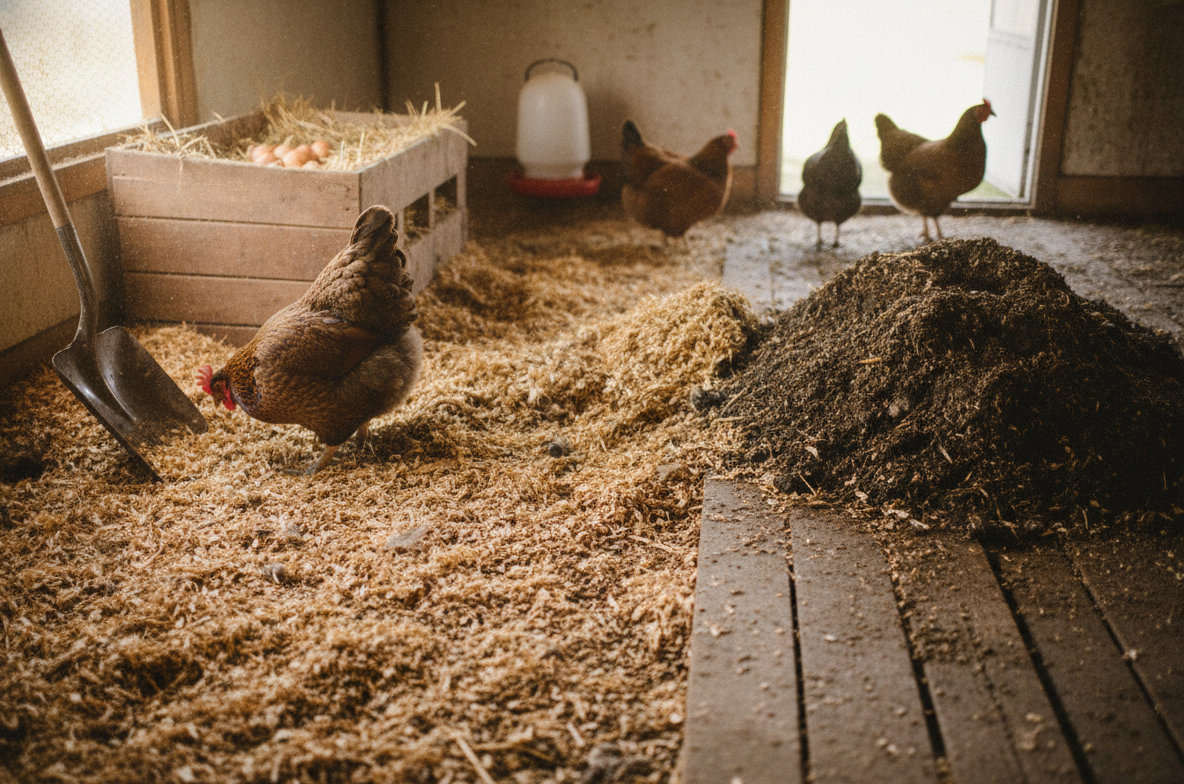
The deep litter method involves building up a thick layer of carbon-rich bedding over several months. Instead of removing all bedding frequently, you add fresh material on top, allowing beneficial microbes to break down chicken droppings within the litter itself. This creates a composting system directly in the coop.
How the Deep Litter Method Works
To start the deep litter method, lay down 4-6 inches of bedding material like wood shavings, straw, or chopped leaves. As chickens deposit droppings, you add thin layers of fresh bedding on top, usually once or twice a week. You also rake or turn the litter daily or every few days to aerate it and encourage microbial activity. The goal is to keep the top layer dry and friable while the lower layers compost. The entire deep litter is typically removed and replaced only once or twice a year.
Strengths of the Deep Litter Method
- Reduced Labor: The most significant advantage is less frequent full coop cleanouts. This saves considerable time and effort compared to regular cleaning.
- Natural Composting: The litter breaks down into nutrient-rich compost directly in the coop. This provides valuable fertilizer for gardens.
- Temperature Regulation: The composting process generates a small amount of heat, which can offer some warmth in colder climates. It also provides insulation.
- Odor Reduction (When Managed Correctly): A well-managed deep litter system, with active microbial decomposition, can actually reduce ammonia odors by converting nitrogen in droppings into less volatile forms.
- Enrichment for Chickens: Chickens enjoy scratching and dust bathing in deep litter, providing natural enrichment and encouraging foraging behaviors.
Weaknesses of the Deep Litter Method
- Requires Careful Management: If not managed properly, deep litter can become a breeding ground for harmful bacteria, parasites, and fungi. It needs regular turning and sufficient carbon material.
- Potential for Ammonia Buildup: Without proper aeration and carbon-to-nitrogen balance, ammonia can still build up, leading to respiratory problems for chickens.
- Flies and Pests: A poorly maintained deep litter can attract flies and rodents, especially if it becomes too wet or contains too much food waste.
- Odor: While a well-managed system reduces odor, mistakes can lead to very strong, unpleasant smells.
- Initial Setup: Building up the initial deep layer requires more bedding upfront.
- Not for All Climates: In very humid environments, it can be harder to keep the deep litter dry enough to compost effectively without becoming a wet, matted mess.
Deep Litter vs. Regular Coop Cleaning Comparison Table
Here is a side-by-side look at the key differences between the deep litter method and regular coop cleaning.
| Feature | Deep Litter Method | Regular Coop Cleaning |
|---|---|---|
| Cleaning Frequency | Full cleanout 1-2 times per year, daily/weekly turning/adding bedding | Daily spot cleaning, full cleanout 1-4 times per month |
| Labor Required | Less frequent heavy labor, but consistent daily/weekly turning | More frequent heavy labor for full cleanouts, consistent spot cleaning |
| Hygiene | Good if managed correctly (microbial breakdown), high risk if mismanaged | Consistently high hygiene with regular maintenance |
| Odor Control | Can be good with proper management, bad if wet/anaerobic | Generally good with consistent cleaning |
| Compost Production | Excellent, creates rich compost directly in coop | Compost created separately from removed waste |
| Cost of Bedding | Lower long term cost, higher initial bedding volume | Higher ongoing cost due to frequent replacement |
| Pest Attraction | Higher risk if wet or poorly managed | Lower risk with consistent cleanliness |
| Skill Level | Intermediate to advanced, requires understanding of composting |
Which Method is Right for Your Flock?
The best cleaning method depends on several factors, including your experience level, time availability, flock size, and climate.
Choose Regular Coop Cleaning If:
- You are new to chickens. This method is simpler to implement and forgiving of mistakes.
- You prefer a consistently pristine coop. Regular cleaning keeps the coop sparkling and virtually odor-free.
- You have limited time for daily management. While full cleanouts are more work, you might not have the time for daily turning required by deep litter.
- You live in a humid climate. Keeping deep litter dry enough to compost effectively can be challenging in high humidity.
- You want minimal health risks. The constant removal of pathogens offers the most direct way to maintain flock health.
Choose the Deep Litter Method If:
- You have experience with composting. Understanding the balance of carbon and nitrogen is key to success.
- You want to reduce your workload. The infrequent full cleanouts are a major draw for busy homesteaders.
- You desire nutrient-rich compost. This method turns chicken waste directly into garden gold.
- You can commit to daily or weekly litter turning. This aeration is vital for a healthy deep litter system.
- You want to provide natural enrichment. Chickens love to scratch and forage in deep litter.
Ultimately, both methods can work for a healthy flock when applied correctly. Regular coop cleaning provides a reliable, low-risk approach, making it the recommended choice for most backyard chicken keepers. The deep litter method offers sustainability and labor savings for those willing to learn its nuances. Whichever you choose, consistent observation of your coop and flock remains the most important factor for success.
Essential Tools for Coop Cleaning
Regardless of your chosen method, having the right tools makes the job easier. You will need:
- A sturdy shovel or scoop
- A stiff-bristled broom or rake
- A wheelbarrow or large bucket for waste removal
- A respirator mask for dust and ammonia protection
- heavy duty gloves
- A pressure washer or hose for deep cleaning (for regular cleaning)
- Diatomaceous earth (food grade) for pest control and odor absorption
Regular maintenance of your coop is just as important as choosing the right cleaning method. For a detailed guide on what to do, check out Your Ultimate Chicken Coop Cleaning Checklist for a Healthy Flock.
MagJo Aspen Nesting Pads for Chicken Coops - USA Grown Aspen Excelsior Nest Box Liners 13x13-12 Pack
- 100% USA GROWN ASPEN NESTING LINERS: 12 Pack of our high quality 13" X 13" Aspen shavings nest liners
- Aspen wood is much healthier for chickens than pine or cedar
- Each of our Aspen Nesting Liners has a Kraft paper backing that not only keeps the aspen shavings.
- Our Aspen Nesting liners create the ideal cushion for your hens and eggs, while allowing the dropping to
Eaton Pet and Pasture Nesting Pads for Laying Hens, 13 x 13 Inch, 10 Pack
- Comfortable Nesting: Give laying hens a soft, inviting place to settle and lay eggs with natural aspen.
- Made for Chicken Coops: These nesting pads fit compatible laying-hen nesting boxes, creating a designated.
- Moisture-Managing Fibers: Sustainably harvested aspen draws moisture towards the kraft paper layer.
- Convenient Pack Supply: Includes 10 hand-packed nesting pads measuring 13 x 13 inches each, ready to place.