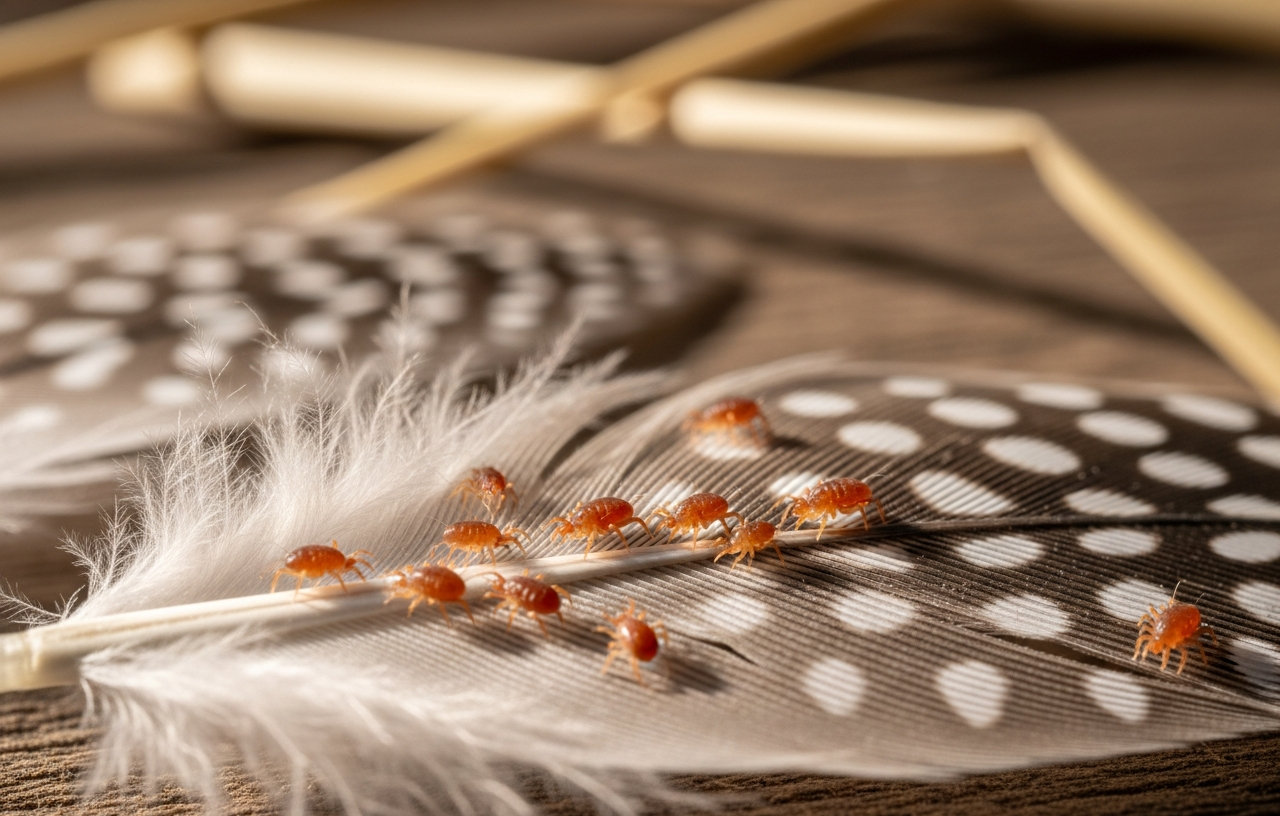
Chicken mites are minuscule external parasites that feed on the blood or skin debris of poultry. These tiny creatures, often smaller than a pinhead, can cause significant distress, health problems, and economic losses for backyard chicken keepers. Recognizing an infestation early is vital for flock health.
What Are Chicken Mites?
Chicken mites are arthropods, part of the arachnid class, making them related to spiders and ticks. They are obligate parasites, meaning they require a host to survive. There are several types of mites that affect chickens, each with distinct behaviors and preferred habitats on the bird or in the coop environment. Mite infestations can lead to anemia, stress, reduced egg production, and even death in severe cases, especially among young chicks.
What Do Chicken Mites Look Like?
Identifying what chicken mites look like depends on the specific species, but most are small, oval-shaped, and have eight legs as adults. Their color can vary based on whether they have recently fed.
Red Mites (Dermanyssus gallinae)
- Appearance: Unfed red mites are gray or whitish. After a blood meal, they appear bright red, hence their common name. They are typically 0.5 to 1.0 mm long.
- Behavior: These are nocturnal feeders. They hide in cracks and crevices of the coop during the day, emerging at night to feed on resting chickens.
- Habitat: Primarily found in the coop structure, especially around roosts, nesting boxes, and wall cracks.
Northern Fowl Mites (Ornithonyssus sylviarum)
- Appearance: These mites are dark red or black and slightly smaller than red mites, usually around 0.5 to 0.7 mm long.
- Behavior: Northern fowl mites are permanent residents on the chicken. They spend their entire life cycle on the host, feeding continuously.
- Habitat: Found directly on the bird, often concentrated around the vent area, tail feathers, and cloaca.
Scaly Leg Mites (Knemidocoptes mutans)
- Appearance: Microscopic, these mites are not visible to the naked eye. Their presence is identified by the damage they cause.
- Behavior: They burrow under the scales of a chicken's legs and feet, causing irritation and lifting of the scales.
- Habitat: Exclusively found on the legs and feet, under the scales.
Depluming Mites (Knemidocoptes gallinae)
- Appearance: Also microscopic, these mites are undetectable without magnification.
- Behavior: They burrow into the feather shafts and skin at the base of feathers, causing intense itching and feather loss.
- Habitat: On the skin at the base of feathers, particularly on the back, breast, and wings.
What Do Chickens with Mites Look Like? Signs of Infestation
Observing your flock for behavioral and physical changes is essential for early detection. What do chickens with mites look like? The symptoms vary depending on the mite type and the severity of the infestation.
General Signs of Mite Infestation
- Restlessness and Irritation: Chickens may appear agitated, constantly preening, scratching, or pecking at their feathers. They might shake their heads frequently.
- Feather Loss: Excessive scratching can lead to bare patches, especially around the vent, neck, and back. Depluming mites specifically cause feather loss.
- Pale Combs and Wattles: Blood loss from feeding mites can cause anemia, making the comb and wattles appear paler than usual.
- Reduced Egg Production: Stressed and anemic hens lay fewer eggs. Eggshells might also become thinner or misshapen.
- Weight Loss: Chronic stress and blood loss can lead to poor appetite and noticeable weight loss.
- Lethargy: Severely infested chickens may become weak, listless, and withdrawn from the flock.
- Vent Area Damage: For Northern Fowl Mites, the vent area may appear dirty, crusted, or have black debris (mite droppings).
Specific Signs for Scaly Leg Mites
If your chickens have scaly leg mites, you will observe distinct changes to their legs and feet. The scales will appear raised, thickened, and crusty. In advanced cases, the legs may look deformed or swollen, and the bird might limp. This condition can be painful and debilitating if left untreated.
Life Cycle of Chicken Mites
Understanding the mite life cycle is important for effective treatment and prevention. The general life cycle for most chicken mites includes egg, larva, nymph (multiple stages), and adult. The entire cycle can be completed rapidly, allowing populations to explode quickly.
Red Mite Life Cycle
Red mites lay eggs in the coop's cracks and crevices, not on the chicken. These eggs hatch into six-legged larvae, which do not feed. Larvae molt into eight-legged nymphs, which then take blood meals and molt through several stages before becoming adults. The entire cycle can be completed in as little as seven days under optimal conditions (warm, humid environments). Adult red mites can survive for several months without a blood meal, making coop sanitation critical.
Northern Fowl Mite Life Cycle
Northern fowl mites complete their entire life cycle on the chicken, usually within 7 to 12 days. Eggs are laid at the base of feathers. These hatch into larvae, which then develop into nymphs, and finally adults. All stages except the egg and non-feeding larva feed on blood. Their continuous presence on the bird makes them particularly irritating and damaging.
Scaly Leg Mite and Depluming Mite Life Cycle
These burrowing mites have a slightly different life cycle, spending their entire lives within the chicken's skin or feather follicles. Females lay eggs in tunnels they create, and the entire cycle from egg to adult takes approximately 10 to 14 days. This internal habitat makes them harder to detect directly and requires specific treatments.
Impact on Chickens and Flock Health
Mite infestations are not just an annoyance; they pose serious health risks to your flock. The constant feeding causes stress, irritation, and blood loss. Anemia can weaken a chicken's immune system, making it more susceptible to other diseases. Reduced egg production is a common economic impact for backyard keepers. For example, a heavy infestation of Northern Fowl Mites can decrease egg laying by 10-15% and cause significant weight loss in laying hens. Young chicks are particularly vulnerable to severe anemia and death from heavy mite loads due to their smaller blood volume.
Identifying an Infestation
Regular inspection of your chickens and their coop is the best way to catch an infestation early.
Inspecting Your Chickens
Gently pick up each chicken and inspect their skin and feathers. Pay close attention to the vent area, under the wings, and around the tail. Look for visible mites, eggs, or black debris. For scaly leg mites, examine the legs and feet for raised or crusty scales. It is a good practice to check your flock every 2-4 weeks.
Inspecting the Coop
For red mites, inspect the coop's cracks, crevices, roosts, and nesting boxes during the day. Use a flashlight to illuminate dark areas. You might see clusters of mites hiding. A common test is the 'white paper test': place a white paper towel under the roosts at night. In the morning, if red mites are present, you will see small red or gray specks on the paper. Maintaining good chicken coop ventilation and a clean environment can deter mites.
What Kills Chicken Mites?
Treating chicken mites requires a two-pronged approach: treating the birds and treating the coop. Various methods and products can be used, but the specific choice depends on the mite type and severity. For a detailed guide on treatment options, including what to use for mites on chickens and coop treatments, refer to our article: . This guide provides actionable steps for eliminating these pests.
Many treatments involve topical applications to the birds or insecticide sprays/dusts for the coop. Diatomaceous earth (food grade) is a popular natural option for both birds and coop, working by dehydrating the mites. Always follow product instructions carefully and make sure any treatment is safe for egg-laying hens if you plan to consume the eggs.
Prevention Strategies
Preventing mite infestations is easier than treating them. A proactive approach involves maintaining a clean environment and regularly monitoring your flock.
- Regular Coop Cleaning: Clean your coop thoroughly every 1-2 weeks. Remove all bedding and scrub surfaces. Red mites thrive in dirty conditions. Consider using appropriate chicken coop bedding that is easy to keep clean and dry.
- Dust Baths: Provide a dedicated chicken dust bath area with fine sand, wood ash, or diatomaceous earth. Dust bathing is a natural way for chickens to keep external parasites at bay.
- Quarantine New Birds: Always quarantine new chickens for at least 30 days before introducing them to your existing flock. This prevents the introduction of mites and other diseases.
- Seal Coop Cracks: Fill any cracks and crevices in your coop walls and roosts to eliminate hiding spots for red mites.
- Regular Inspections: Consistently check your birds and coop. Early detection allows for easier and more effective treatment.
Distinguishing Mites from Lice on Chickens
Many backyard keepers wonder, what do chicken lice look like?
What Do Chicken Lice Look Like?
Chicken lice are insects, not arachnids, meaning they have six legs instead of eight. They are typically larger than most mites, ranging from 1 to 3 mm in length, and are yellowish or tan. Lice are often visible to the naked eye, especially when parting feathers. They are fast-moving. Unlike many mites, lice chew on skin debris and feathers rather than sucking blood, although heavy infestations can still cause irritation and stress.
You will often see lice eggs, called nits, firmly attached to the feather shafts, particularly around the vent. What does lice look like on chickens? They appear as small, elongated, white or pale yellow specks glued to the feathers. Mites, with the exception of Northern Fowl Mite eggs, do not typically lay eggs on the chicken's feathers.
For more specific information, consult the article.
Conclusion
Chicken mites are a persistent threat to backyard poultry health. Understanding what chicken mites look like, their life cycles, and the symptoms they cause in your flock empowers you to act quickly. Regular inspections, good coop hygiene, and prompt treatment are the best defenses against these tiny but impactful parasites. Vigilance helps maintain a healthy, productive flock.


